Kamakura · Nikaido and Jomyoji (east)
Sugimotodera
How to get there and what to see · facts checked 2026-10-24
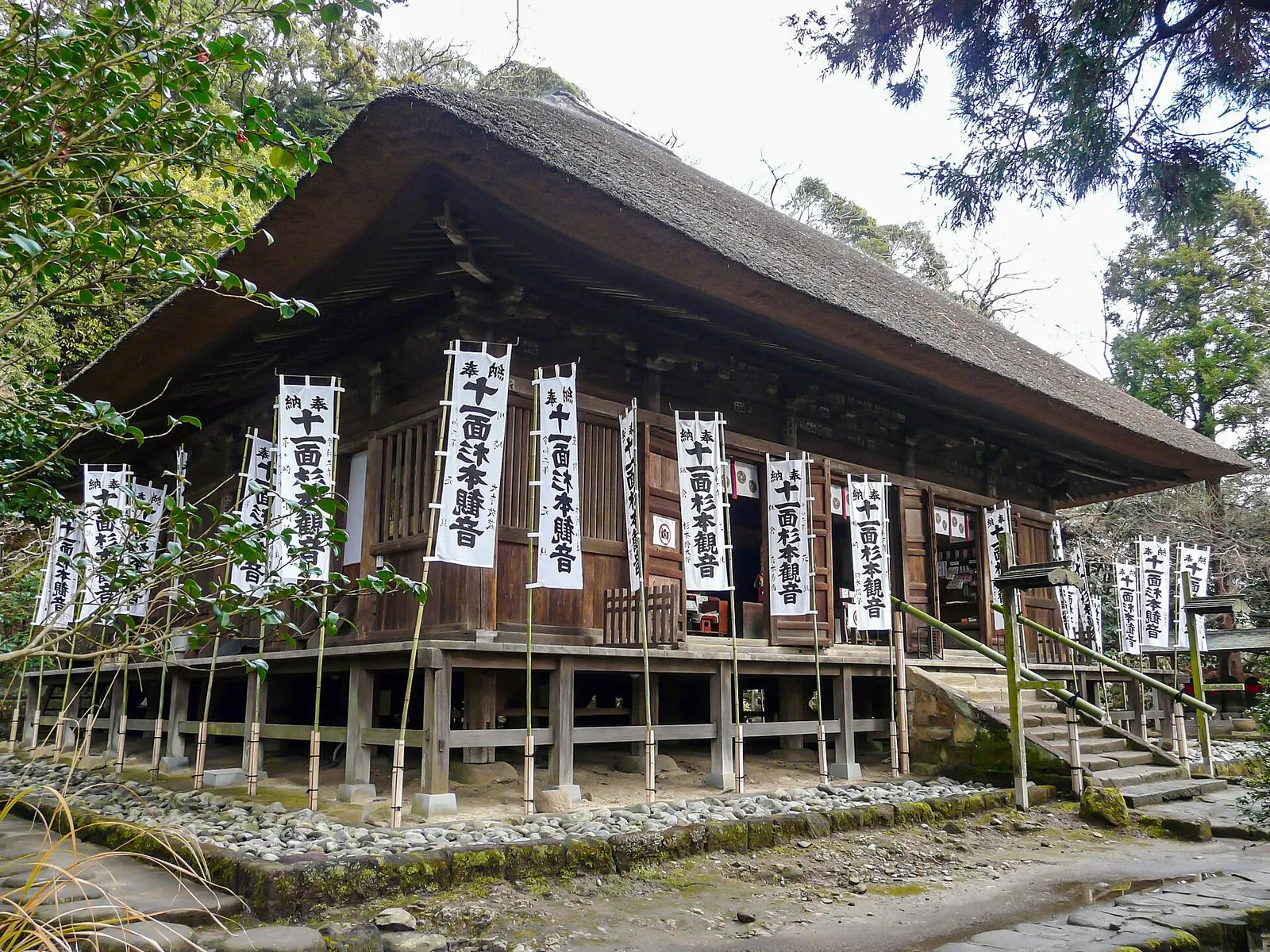
Photo: Naokijp・CC BY-SA 4.0
Said to date from 734, the oldest temple in Kamakura, with a thatched hall at the top of a flight of mossy stone steps.
- Nearest station
- 25 min walk from Kamakura Station
- Hours
- 9:00–16:00 (last entry 15:45)
- Admission
- High school age and up ¥300, junior high ¥200, elementary ¥100
What to see
- Three hidden eleven-headed Kannon, two of them Important Cultural Properties.
- Nio gate with a thatched roof; its guardian statues are attributed to Unkei.
- The moss-covered stone steps up to the main hall.
- Okura Benzaiten hall, for the goddess of wealth and fortune.
Seasons
- Spring: early cherry, shaga and azaleas. Summer: hydrangea and crape myrtle. Autumn: spider lilies and maples. Winter: sasanqua and wintersweet (temple's guide).
History
Tradition says Fujiwara no Fusasaki and the monk Gyoki built it in 734 at the wish of Empress Komyo. Its main images are three eleven-headed Kannon said to be carved by Gyoki, Ennin and Genshin.
Getting there
A 25-minute walk from JR Kamakura Station, or take a Keikyu bus from stop 4 at Kamakura Station to Sugimoto Kannon, then walk one minute. There is no parking.
Address:903 Nikaido, Kamakura, Kanagawa
Before you go
In 2026 the main hall is under earthquake-proofing work until early December, and the three hidden Kannon are on special display in the hall on set days (¥1,000 extra; please don't photograph inside). The temple closes when a typhoon approaches.
Map of sights in Kamakura
Tap a red pin to open that sight's page.
Nearby sights
← Kamakura guide: trains from Tokyo
Sources
Hours, prices and history come from the official websites and public tourism pages listed here. They can change, so check the official site before you go.
- 杉本寺 公式サイト(checked 2026-10-24)
- 杉本寺 公式サイト(アクセス)(checked 2026-10-24)
- 杉本寺 公式サイト(境内)(checked 2026-10-24)
- 杉本寺 公式サイト(縁起)(checked 2026-10-24)
- 杉本寺 公式サイト(季節の花)(checked 2026-10-24)
- 杉本寺 公式サイト(令和8年 本堂改修工事・午年特別開帳)(checked 2026-10-24)
- 鎌倉市観光協会(杉本寺)(checked 2026-10-24)
Map data:© OpenStreetMap contributors