Kamakura · Hase and Gokurakuji
Jojuin
How to get there and what to see · facts checked 2026-10-24
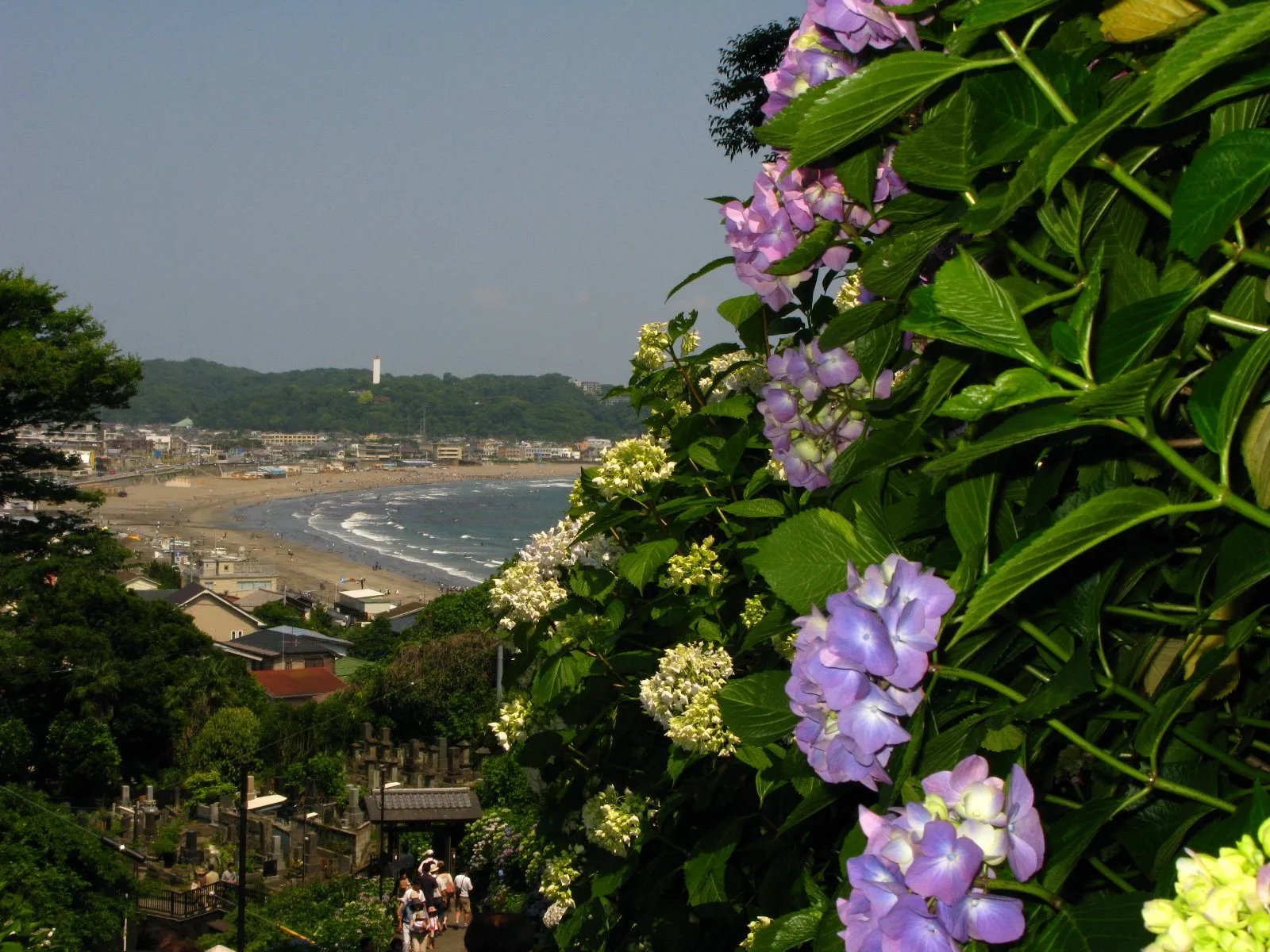
Photo: Pcs34560・Public domain
A hilltop temple at the top of 108 steps, known for its view down to Yuigahama bay and a Fudo Myoo visited for good matches.
- Nearest station
- 3 min walk from Gokurakuji Station
- Hours
- 8:00–17:00; until 16:30 from November 1 to March 1
- Admission
- Donation (no set fee)
What to see
- The view over Yuigahama bay from the top of the steps.
- Fudo Myoo, the main image, much visited by people praying for a good match.
- Koyasu Jizo and the two round "child-bearing stones", said to help those hoping for children.
- Kokuzo hall, stop 13 of the Kamakura Thirteen Buddhas pilgrimage, with a fair on the 13th of each month.
Seasons
- Iwatabako in spring, lotus in summer, bush clover in autumn (tourism association). Most of the famous hydrangeas on the steps were given away in 2016; about 30 remain.
History
Built in 1219 by the regent Hojo Yasutoki where Kukai once performed fire rituals. It burned when Nitta Yoshisada attacked Kamakura in 1333 and was rebuilt on its original site by the monk Yuson in 1688.
Getting there
Three minutes on foot from Gokurakuji Station on the Enoden line (the temple's figure; the tourism association says five). It sits on a hilltop up 108 stone steps.
Address:1-1-5 Gokurakuji, Kamakura, Kanagawa
Before you go
No tripods (tourism association). There is no parking or public toilet.
Map of sights in Kamakura
Tap a red pin to open that sight's page.
Nearby sights
← Kamakura guide: trains from Tokyo
Sources
Hours, prices and history come from the official websites and public tourism pages listed here. They can change, so check the official site before you go.
- 成就院 公式サイト(拝観案内)(checked 2026-10-24)
- 成就院 公式サイト(縁起)(checked 2026-10-24)
- 鎌倉市観光協会(成就院)(checked 2026-10-24)
Map data:© OpenStreetMap contributors